
Weld grinding
Remove weld reinforcement and level the joint while controlling heat and gouging.
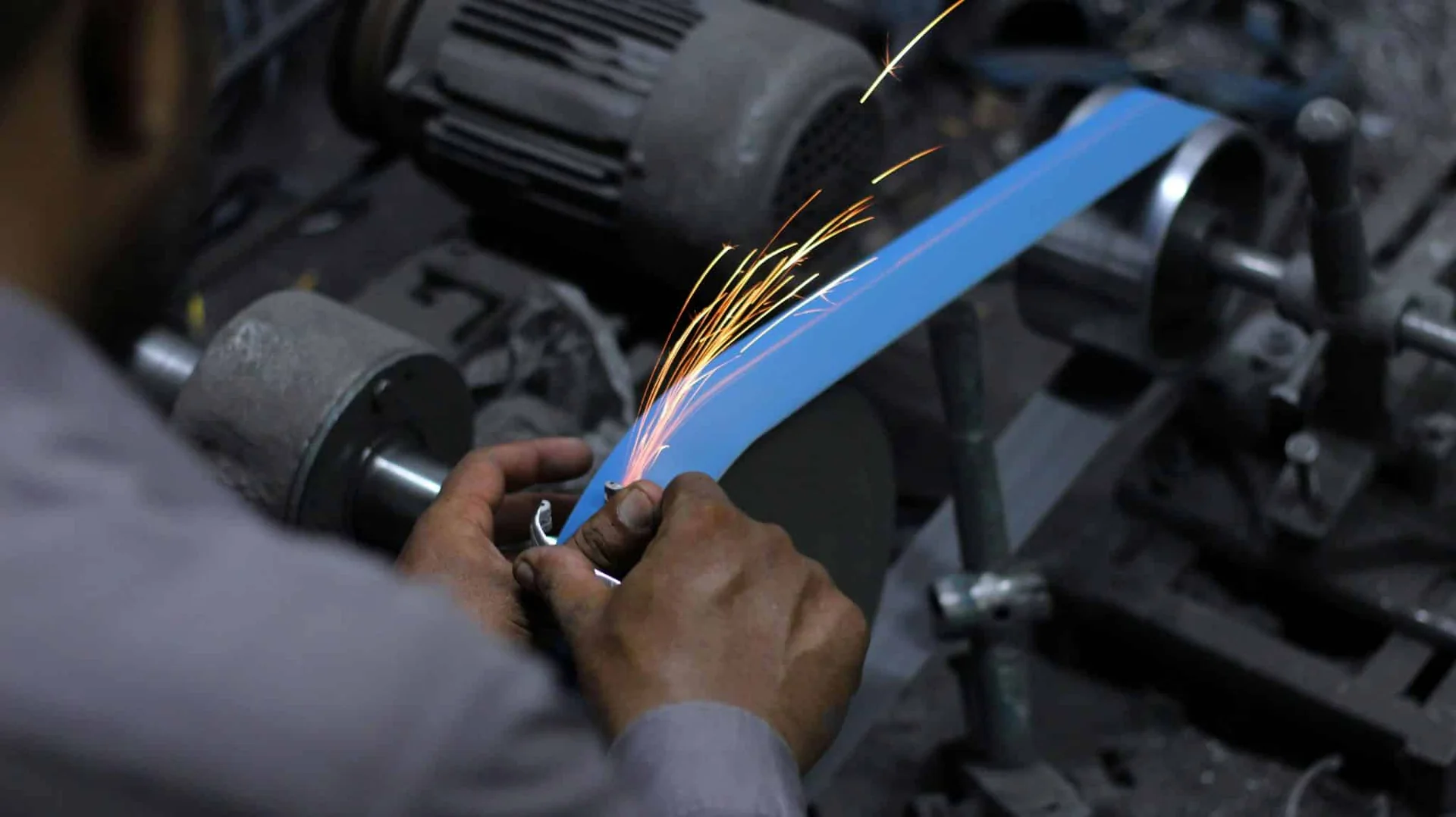
Abrasive belts, rolls, discs and sheets for grinding, deburring, blending and surface preparation—selected around the metal, machine and required finish.
Removal rate, access, heat, contamination and finish sensitivity change from one operation to the next. Specify the operation before selecting the abrasive.
Remove weld reinforcement and level the joint while controlling heat and gouging.
Remove sharp edges and burrs with a format suited to the part geometry and access.
Refine transition areas and establish the required directional or uniform scratch pattern.
Create a clean, consistent surface appropriate for the specified coating process.
Excess pressure, unsuitable speed, worn abrasives, contamination and inconsistent technique can all look like an abrasive problem.
Compare abrasive grain behaviour →Discolouration or distortion indicates too much heat input. Check: pressure, speed, contact time, abrasive condition and contact system.
Short life may reflect the wrong construction or operating conditions. Check: metal, load, speed, backing demands and contamination.
Visible high or low spots suggest uneven removal. Check: grit progression, contact angle, tool control and inspection method.
Mixed grits or variable pressure leave patchy lines. Check: abrasive condition, sequence, technique and workpiece cleanliness.
These format roles are general. Stainless-steel contamination control, non-ferrous loading and finish-sensitive work require application-specific review.
| Metal / operation | Belts | Rolls | Discs | Sheets |
|---|---|---|---|---|
| Carbon steel fabrication | Grinding, linishing and blending | Contours and manual preparation | Edges, welds and local work | Hand finishing and preparation |
| Stainless steel | Controlled machine finishing | Flexible blending where suitable | Local grinding and refinement | Directional hand finishing |
| Non-ferrous metal | Application-dependent | Flexible preparation | Local removal and finishing | Hand preparation |
| Coating preparation | Machine preparation | Profiles and contours | Large or local surfaces | Edges and detail areas |
Keep materials and abrasives segregated where cross-contamination matters, and validate the process on a representative workpiece.
Confirm material, operation, machine and finish target before trialling a new specification.
Not automatically. Metal type, contamination requirements, loading behaviour, heat and finish target can require different choices.
Review pressure, speed, contact time, abrasive condition, contact system and workpiece sensitivity. Change one controlled variable at a time.
The starting grit depends on weld height and required removal. Later stages depend on the final scratch pattern or coating requirement. Trial a complete sequence.
Share the metal, operation, machine, format, dimensions, current abrasive, grit sequence, quantity and the problem or finish target.
Describe the metal, machine, contact system, current process and required result so we can narrow the format and construction.