
Surface assessment
Identify gelcoat, paint, composite or filler and record defects, contamination and prior repairs.
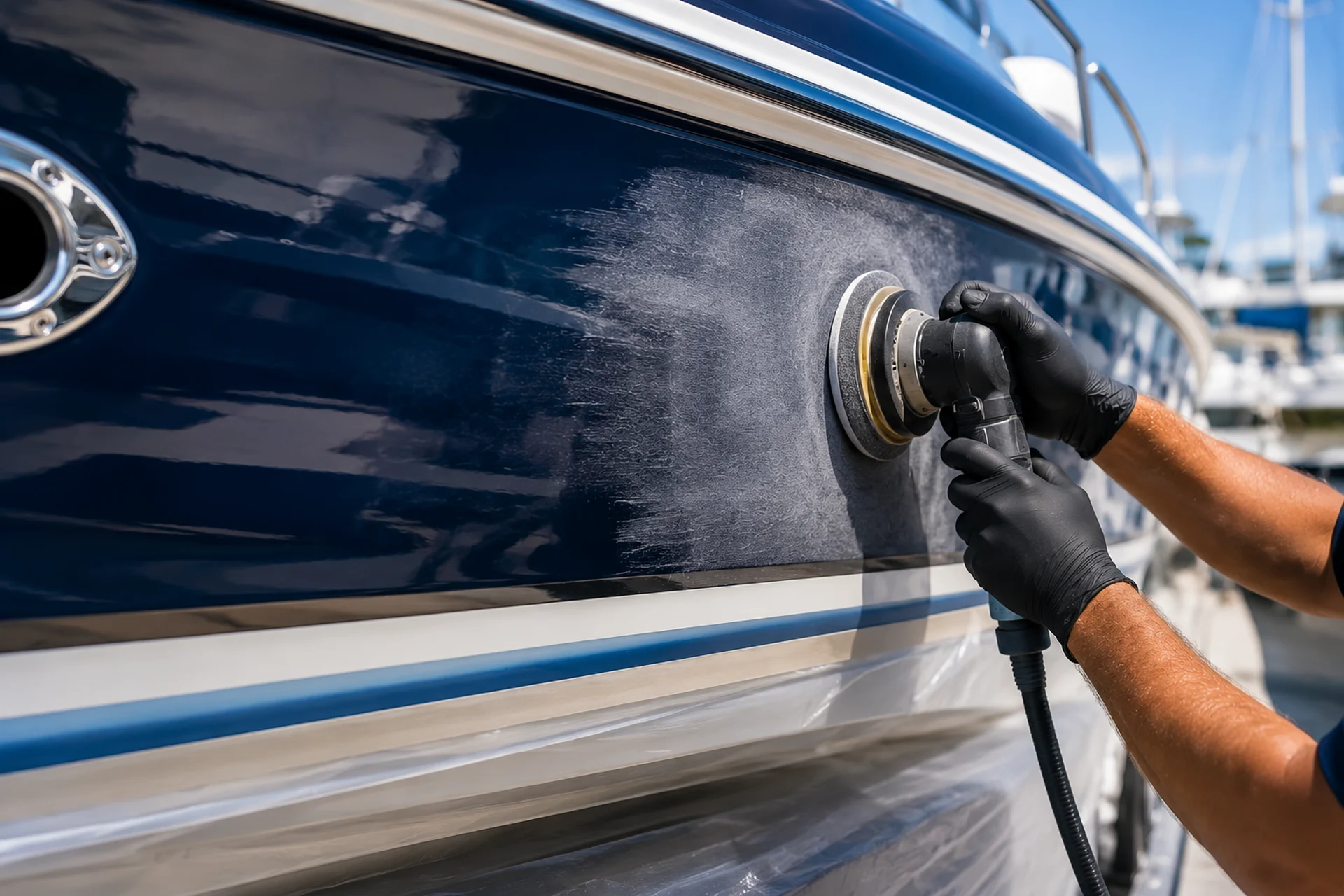
Sheets, discs and rolls for gelcoat, painted hulls, composites and repair preparation—selected around the substrate, stage and finish required.
Boat surfaces vary by substrate, coating and condition. Confirm the repair system before changing grit, format or sanding method.
Identify gelcoat, paint, composite or filler and record defects, contamination and prior repairs.
Level compatible filler or repair transitions while preserving the intended hull shape.
Use a controlled sequence so each stage removes the previous scratch pattern.
Prepare the surface for the planned coating, polishing or finishing operation that follows.
Inspect where and when the problem appears before changing the abrasive.
Review grit progression →Removed coating or residue fills the abrasive. Check: surface condition, cure, cleanliness, extraction and wet/dry suitability.
High and low areas remain visible. Check: block or pad support, pressure, contact area and inspection method.
Earlier marks remain after refinement. Check: grit jumps, contamination and whether each stage was completed.
Ridges and edges lose coating quickly. Check: pressure, backing flexibility, tool control and local hand sanding.
Follow the coating, gelcoat or repair-material instructions. Validate any revised method on a representative test area.
Consider when: the repair or coating system permits wet sanding.
Consider when: the system permits dry work and the tool, extraction and finish target suit it.
Boat construction and coating systems differ. Follow the relevant manufacturer instructions and validate process changes.
The choice depends on curvature, access, coating stage, tool and required finish. Flexible sheets, suitable discs and cut roll lengths may each have a role.
Follow the coating or repair-system instructions. The correct method depends on substrate, stage, abrasive, dust control and required finish.
Do not decide by industry label alone. Confirm the abrasive construction, substrate, coating system, wet/dry requirement and process stage.
Yes. Test on representative material and assess cut, loading, scratch pattern and finish before broader use.
Share the substrate, repair stage, tool, current abrasive, grit sequence and wet/dry process so our team can help narrow the options.