
How to order the right sanding belt.
Give your supplier the machine, belt size, material and job—not only a grit number. Clear information makes it easier to check the available construction and recommend a sensible starting option.
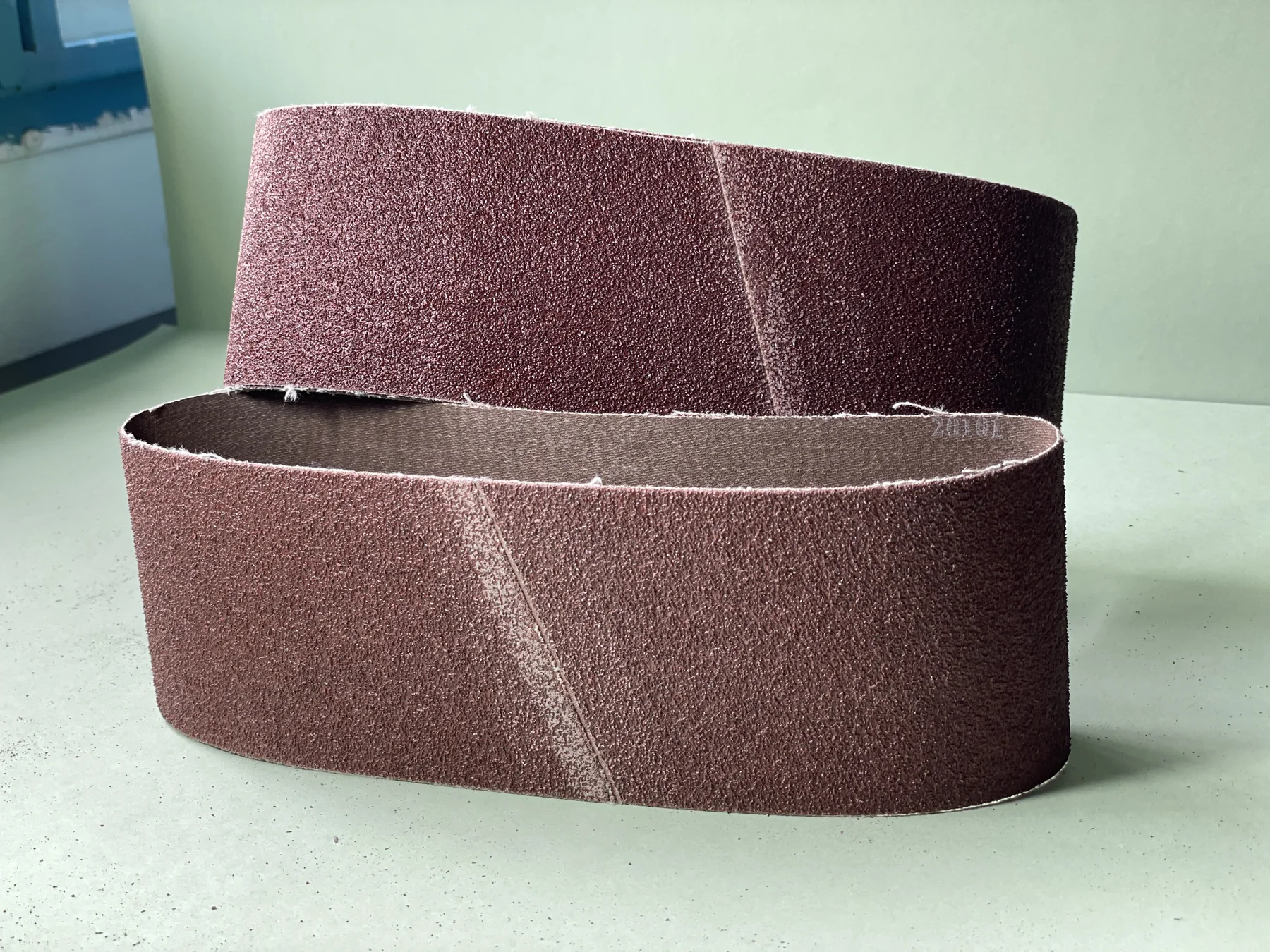
Six details to prepare before you enquire.
You do not need to know every technical term. Start with what you can confirm, and include photographs of the old belt, machine label or sanding result when useful.
- 01
Start with the machine
State the machine type and model if known—for example a wide-belt sander, narrow-belt linisher or portable belt sander. The machine helps define the size and operating demands.
- 02
Give the belt size
Measure and state width × length in millimetres. The length is the full belt circumference, not the folded length.
100 × 915 mm100 mm width · 915 mm belt length - 03
Choose or report the grit
Use the current P grit if it performs well. If you need faster removal or a finer finish, explain that result instead of guessing a new grit.
- 04
Describe the material
Name the workpiece as precisely as practical: timber species, board, carbon steel, stainless steel, aluminium, paint, primer or another surface.
- 05
Explain the job
State whether you are calibrating, removing stock, blending welds, shaping edges, preparing for coating or producing a final finish.
- 06
Share the current problem
Describe short belt life, loading, burning, belt breakage, poor tracking, slow cutting or an unwanted scratch pattern. Include the current product code and quantity if known.
What to send your supplier.
Copy this format into an email or message and complete as much as you know.
Machine:
Belt size (width × length, mm):
Material being sanded:
Job or process:
Current abrasive and P grit:
Required finish:
Current problem:
Quantity:
Helpful attachments: a clear photo of the old belt markings, machine label, workpiece and current sanding result.
What if I do not know the abrasive type?
That is fine. Provide the machine, belt size, workpiece and job first. Your supplier can then check suitable grain, backing, coating and available grit options for the application.
For the selection principles, read the abrasive grain guide and grit sequence guide.
Ready to check your belt requirement?
Send the details you know. You can review the generated WhatsApp enquiry before sending it.